
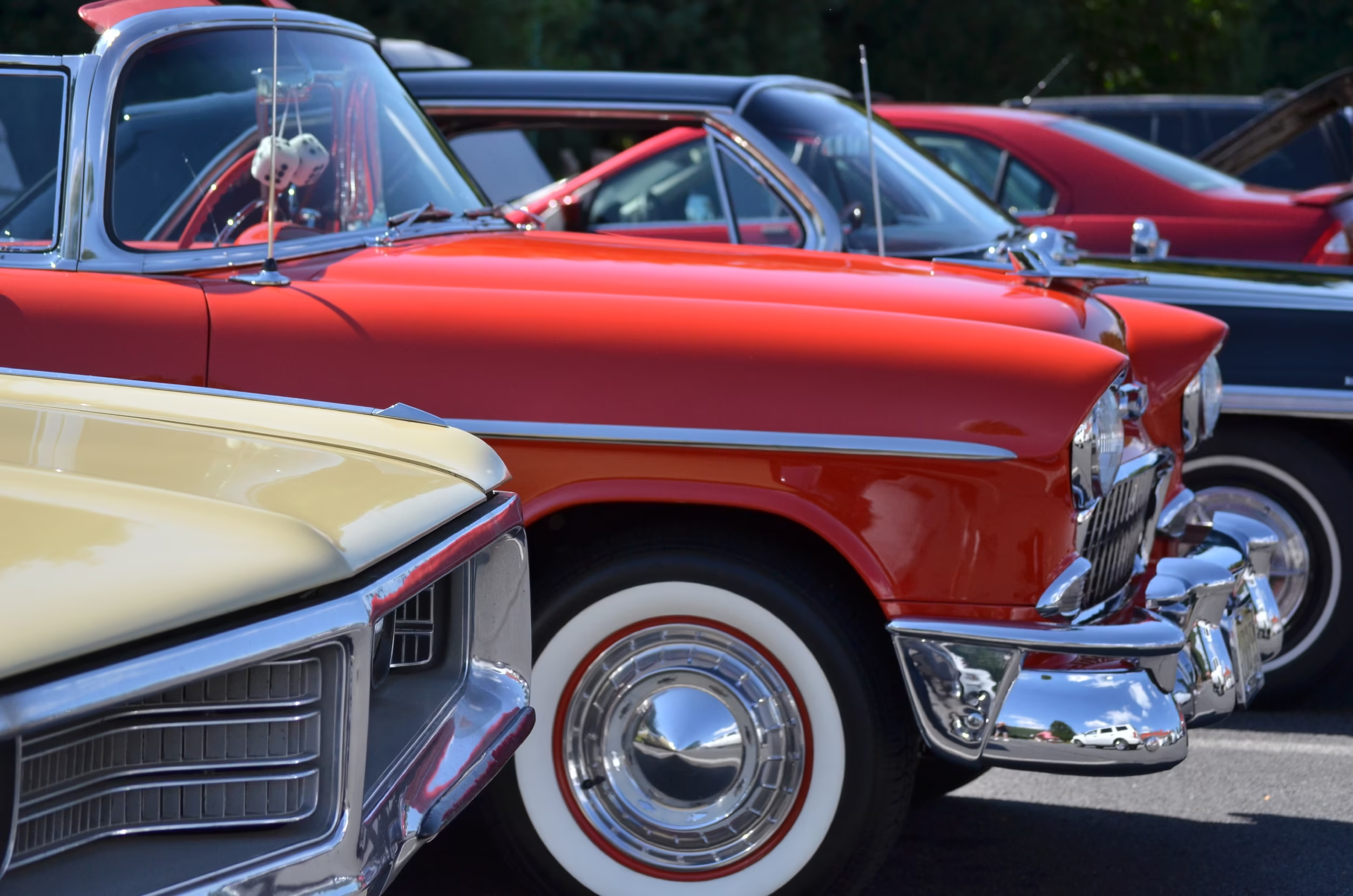
A classic vehicle isn’t like any other car on the road — and it shouldn’t be insured like one. Unlike standard vehicles that depreciate over time, collector cars often hold their value or appreciate, making the way your policy calculates a payout one of the most important decisions you’ll make as an owner.
Standard auto insurance uses actual cash value to settle claims — which means depreciation is factored in, and the payout rarely reflects what the vehicle is truly worth. Classic vehicle insurance works differently. As an independent agency, we work with carriers that specialize in this space to find coverage that reflects the real investment behind what you own.
What Your Classic Vehicle Policy May Include
Classic vehicle insurance is built around the nuances of collector cars, antiques, and specialty vehicles — with coverage options you won’t find on a standard auto policy. Below are the core types we’ll walk you through.
- Agreed Value Coverage — You and the insurer agree on your vehicle’s value upfront. If it’s totaled or stolen, that’s exactly what you receive — no depreciation, no negotiation, no surprises. This is the single most important distinction between classic vehicle insurance and a standard auto policy.
- Liability Coverage — Covers bodily injury and property damage you cause to others while driving — required in Washington, Oregon, and Arizona regardless of vehicle type.
- Comprehensive & Collision Coverage — Covers physical damage to your vehicle from accidents, theft, fire, weather, and other covered events. Essential for vehicles that have taken years — and significant investment — to restore.
- Spare Parts & Tools Coverage — Covers spare parts and personal tools kept specifically for maintaining or restoring your classic vehicle, which standard policies typically exclude.
- Restoration Coverage — Protects the increasing value of a vehicle while it’s actively being restored — so your investment is covered before the project is complete.
- Inflation Guard — Automatically increases your agreed value limit annually to keep pace with market appreciation and rising restoration costs — varies depending on the carrier.
- Flatbed Towing — Many classic vehicle policies include guaranteed flatbed towing to prevent additional damage during transport — a detail standard roadside assistance often misses.
When Should You Review Your Classic Vehicle Coverage?
Classic vehicles are often well cared for and underused, which can make it easy to assume the coverage is fine too. But the value of a collector vehicle can shift significantly over time, and a policy that hasn’t been updated may leave a real gap between what you’re covered for and what the vehicle is actually worth.
Here are the moments that should prompt a closer look:
- You acquired a new vehicle for your collection — Each addition to your collection needs its own review — value, usage, storage, and the right coverage type can vary significantly vehicle to vehicle.
- You completed a restoration or major upgrade — A finished restoration, custom fabrication, or significant mechanical upgrade can substantially increase your vehicle’s value. Your agreed value should reflect it.
- The market has shifted — Collector car values fluctuate with trends, auction results, and broader economic conditions. An appraisal that’s a few years old may no longer reflect what your vehicle would bring today.
- Your usage or storage situation changed — If you’ve moved, changed storage arrangements, or started taking the vehicle to shows or track events, your coverage should be reviewed to match.
- You’re still on a standard auto policy — A standard policy wasn’t designed for collector vehicles. If you haven’t made the switch to dedicated classic vehicle coverage, it’s worth finding out what you’re missing.
- You can’t remember the last time you looked at it — Classic vehicles are driven carefully and stored with care — but that doesn’t mean the policy covering them should be left on autopilot.
We make it easy to review your classic vehicle coverage. Give us a call or send us a message and we’ll take a look at what you have — and whether we can find you something better.
Agreed value, stated value, and actual cash value — what’s the difference?
This is one of the most important things a classic vehicle owner can understand about their policy. It’s also one of the most commonly misunderstood.
Actual cash value (ACV) is what standard auto policies use. It pays out what your vehicle was worth at the time of the loss, factoring in depreciation. For a collector car, that number is almost always lower than what the vehicle is actually worth. Stated value sounds like an upgrade, but it has a catch: most stated value policies pay out whichever is lower: the stated amount or the actual cash value. That means you may still end up with a depreciated payout, even if you declared a higher number. Agreed value is the standard for serious collector vehicle coverage. You and the insurer agree on the vehicle’s value upfront — factoring in restoration work, custom parts, and current market conditions — and that’s the number you’d receive in the event of a covered total loss.
“A new car loses value the moment it’s driven off the lot. The valuation of a classic car can grow over time.” -Farmers Insurance
If your current policy doesn’t use agreed value, it’s worth a conversation. Give us a call and we’ll take a look at what you have.